

The Human in the Loop: Why Aviation AI Needs to Fly
18th Aug 2026 - 5 Minutes read
Why AI needs to work in aviation.
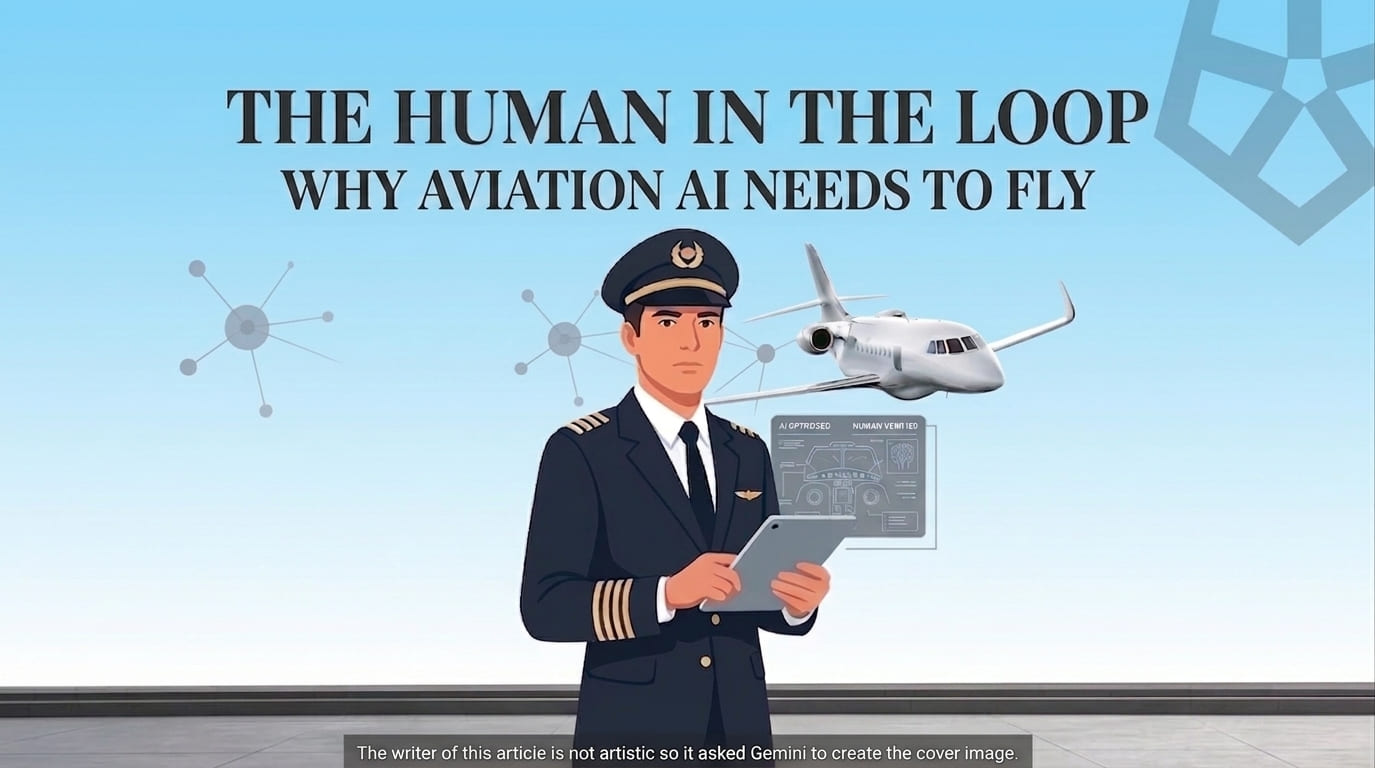
Table of content
The Human in the Loop: Why Aviation AI Needs to Fly
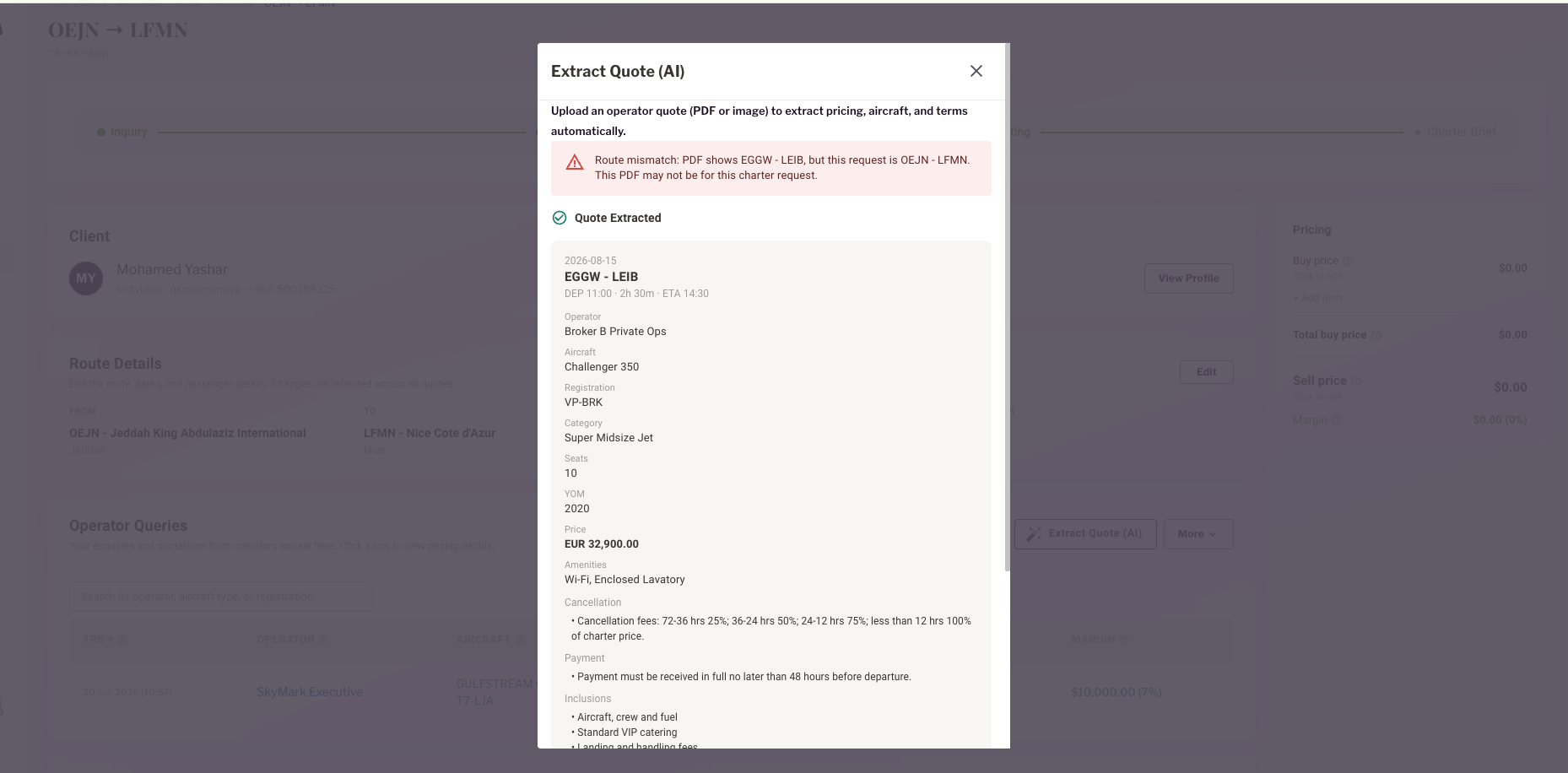
In a recent sales call, I introduced Orion by Tribe. One of the key features I introduced was the Quote Extraction feature for a charter flight. A user gets the quote from the operator (a charter airline), uploads it onto Orion on Tribe, and it will parse the route, the inclusions, exclusions, and show you the extracted quote.
When I was a charter broker, I used to do it manually. You would type in the details, read the exclusions and add those details to the charter quotation that you send to the client. It was time-consuming. Imagine doing that on 10 quotes across multiple charter requests a day. Combining that with sales reports, looking over an ongoing flight, etc., a day in the life of a charter broker becomes extremely taxing. With Orion by Tribe’s quote extraction feature, a day as a charter professional becomes extremely productive.
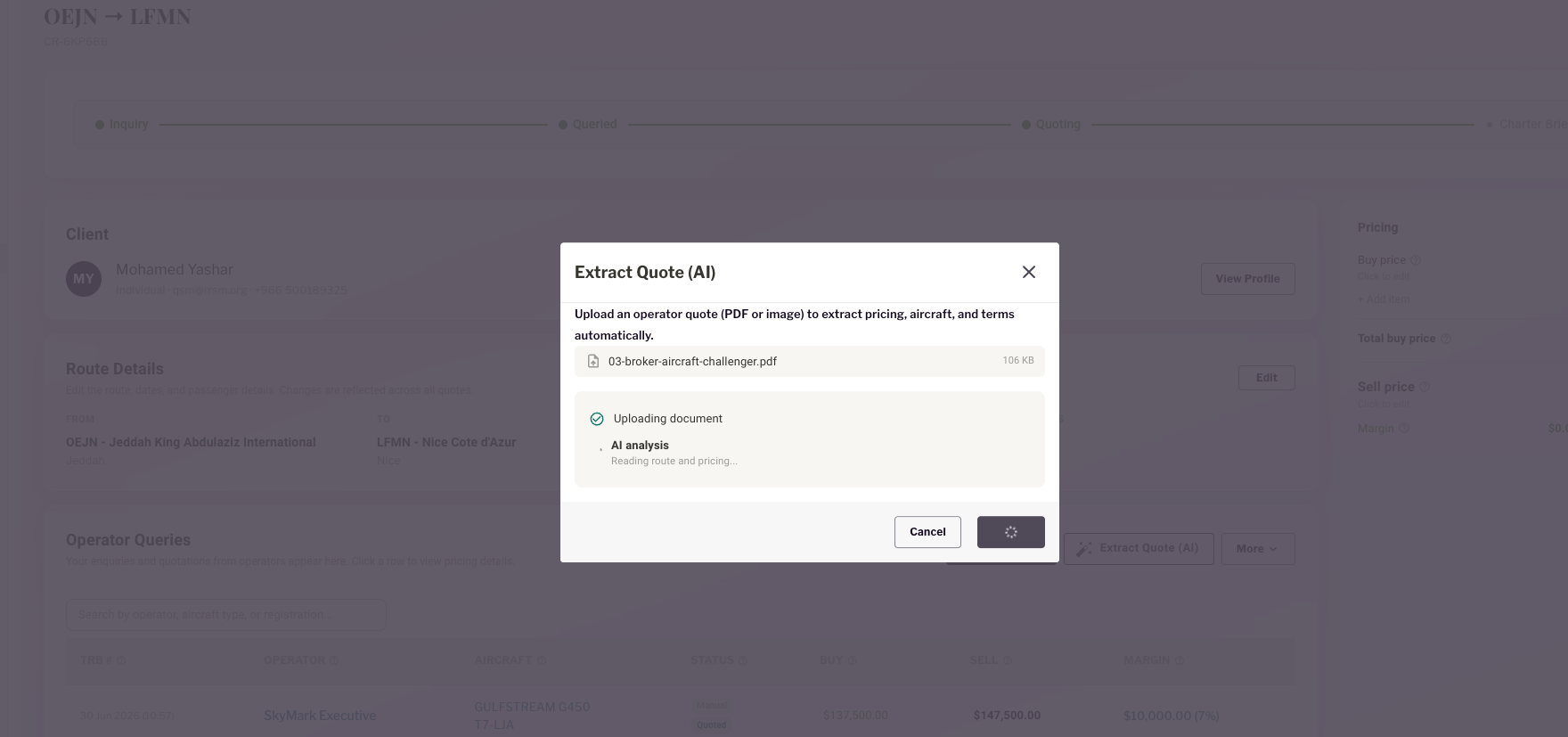
But my excitement was greeted with slight skepticism. He said they don't trust AI and they would rather use Excel or Word to create their quotation; he was worried about errors in extraction. What if the AI extracted the wrong price, the wrong year of manufacture, or hallucinated what is included in the quote?
There is some legitimacy to the concern. Popular media has propagated the narrative that AI can't be trusted, that models can go rogue and are always sycophantic.
In fact, we noticed it in our own tests: when we told Orion to make us an aircraft brochure based on a used aircraft for sale and told it to make it look like something the buyer would like, it made up equipment that didn't exist in the original aircraft to make it more attractive.
But on this particular use case on show, we had harnesses built around the extraction feature. It was bound by 1:1 parsing and data schema, and no reasoning or extended thinking was required. We also used best-in-class models as per Roboflow and Anthropic (their evals can be seen here: https://playground.roboflow.com/evals).
Furthermore, there is always a human in the loop accepting the extracted result, so the end user never really gets to see the final quote unless a human is approving the extraction.
Relationship between AI and Aviation.
Artificial Intelligence has always been present in aviation in the form of machine learning, prediction, and simulations. When we fly on an aircraft, it has hundreds of thousands of parts that needs to be maintained. When and how we maintain them is decided by software that predicts when a certain part will need maintenance or replacement based on millions of data points. These data points include landing cycles, miles, weather, and hundreds, if not thousands, of other parameters. Data scientists have been using tools like Monte Carlo simulations to run probabilistic conclusions on these data points to reach predictive maintenance outcomes.
AI has always been in the background, running back-office ops with precision and making incredibly difficult decisions at superhuman speed. Think of it like a really good restaurant with Michelin-starred chefs making food that tastes divine - only that you dont see the cook who is in the back-kitchen.
But it's different now. It feels emotional.
Before the ChatGPT moment, AI felt deterministic. You could feed it a dataset and get a predictable set of answers, a probability distribution around which you would make a judgment within a standard deviation. You couldn't tell if the AI was right or wrong unless you knew it was wrong. 1+2 cannot be 5.
But now, you can tell, with a degree of certainty, if it is right or wrong. You can also correct it; you can also challenge it. And this creates an emotional connection, and where there are emotions involved, you are less likely to give an objective assessment of things.
Why AI Matters in Aviation?
If we consider some of the most stressful jobs in the world, Airline Pilot, Aircraft Maintenance Technician, and Air Traffic Controller often come up (https://ca.indeed.com/career-advice/finding-a-job/most-stressful-jobs). However, they rarely make the headlines when it comes to AI applicability in the workplace. That's because similarly stressful jobs, like being a surgeon or a nurse, seem to have a more direct impact on individual end users. AI curing a disease or a surgeon diagnosing a disease mid-surgery makes for a better headline than an Air Traffic Controller going through a stressful day managing a busy airspace.
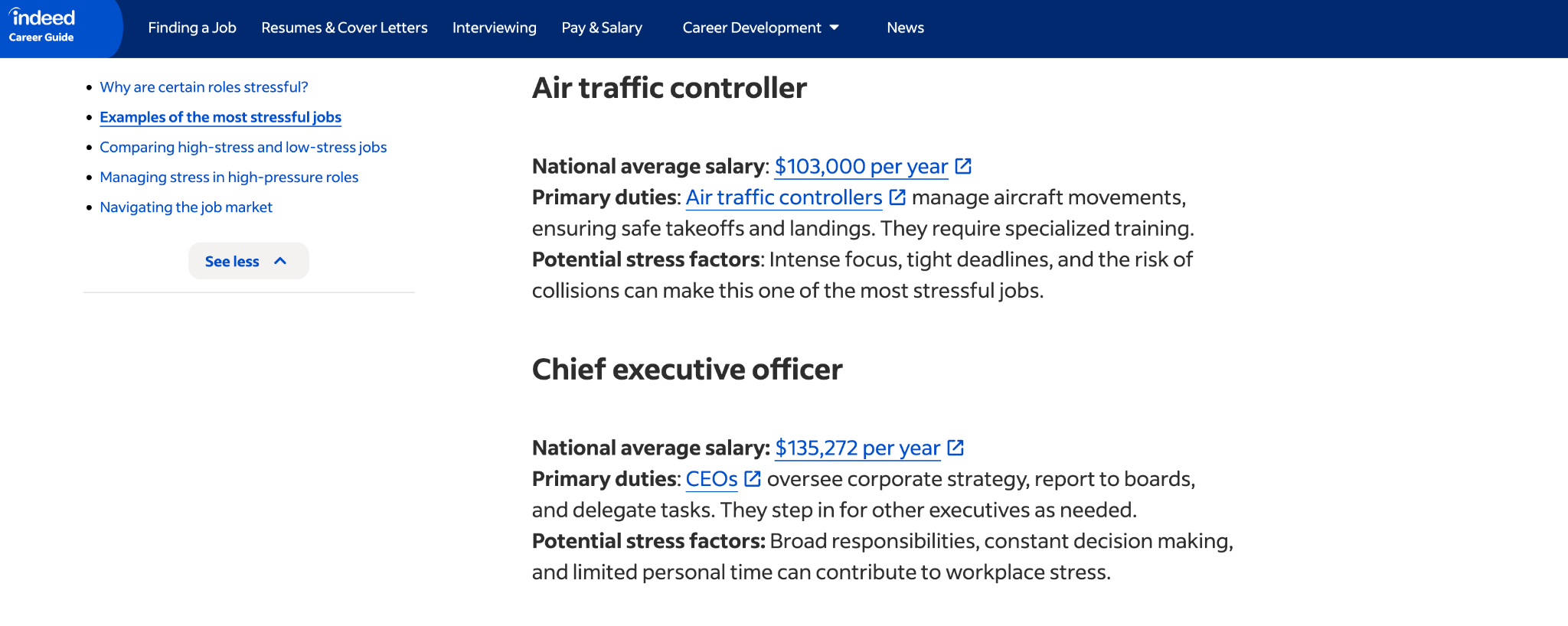
But a stressed-out pilot or ATC personnel is likely to have a bigger disaster impact than a stressed-out surgeon, primarily because an aircraft carries hundreds of people. The impact of AI on a single event is significantly higher in aviation than its impact on a single surgery.
However, AI's overall impact on healthcare, because of its research capability, is extraordinary, if claims by frontier labs are true that AI will find a cure for cancer in 5–10 years.
So Why the AI Hate and Scare-Mongering?
Like in my introduction, there is an overall lack of trust for AI in aviation. I am going to approach my analysis from a private aviation lens. Below are some of the reasons:
- Extremely regulated industry: Aviation is highly regulated; it takes almost a decade to get a new airframe approved. Change is accepted slowly, if ever. Though AI may be scaling at subsonic speed, to get accepted in aviation, the AI industry will have to adapt to the aviation industry’s pace. Slow and thoughtful execution.
- Tech acceptance: Sabre, Travelport, and Amadeus were built decades ago on traditional IBM mainframes. Until recently, they operated on these legacy systems, only transitioning completely to current programming frameworks in 2024. In private aviation, the story is even more outdated: schedules, maintenance, and duty logs are still collected on spreadsheets. Imagine how long it may take for MCPs and RAG to be accepted.
- AI taking over jobs: If you need someone to write a logbook, update a maintenance manual thats a job that AI can replace. But no amount of automation can replace what my eyes see and how I relay that information using suttle emptional cues to another human.
- The OTA misconception: OTAs were supposed to drive out travel agencies, yet travel agencies still exist and thrive. Some believe AI will not add as much value as promised, asking: Internet never replaced travel agents, why do I need to learn AI?
What an aviation world should look like with good AI?
There has never been a time when the largest companies in the world are working and investing billions to make intelligence as cheap and accessible as possible. Like many industries, the aviation industry will find it hard to ignore its importance
- Regulation is important, but at the speed AI is moving, regulating its growth, within the harnds of few, will be difficult. Aviation regulations should focus on results. Example: AI should help determine pilot stress cycles and ATC peak times, but let humans manage them.
- We cannot expect Zero-to-One transformation in hours, but we must start the journey now. For example, getting mechanics to learn to use AI to ask the right questions on an indexed Minimum Equipment List (MEL). This is low-hanging fruit that can add hours of productivity. Imagine a mechanic not spending hours trying to find a sentence in a 300-page manual.
- AI won't take over your job if you can perform it better than your competition can. But if you don't use AI as a tool to deliver better products and services, you will be left behind. In aviation sales, this is prominent: finding an aircraft immediately during an AOG, getting back to a customer with landing permit information instantly, or updating an aircraft owner on a maintenance schedule in record time. AI can help you deliver these services better and faster.
Skepticism in aviation isn't a flaw, it's a safety mechanism built over decades of safe skies within a very high-stakes operations environment. But refusing to adopt controlled, human-in-the-loop AI is not protecting the industry; it's choosing manual inefficiency over speed and precision. These tools can help relieve stress on an overworked industry and open new doors for career opportunities for individuals burned out under legacy systems. The future of aviation isn’t AI vs Human, its the AI-empowered human outperforming the one stuck in a spreadsheet.
There has never been a time when the largest companies in the world are working to make intelligence as cheap and accessible as possible. Like many industries, the aviation industry will find it hard to ignore its importance.
Heading 1

Heading 2
Heading 3
Heading 4
Heading 5
Heading 6
Lorem ipsum dolor sit amet, consectetur adipiscing elit, sed do eiusmod tempor incididunt ut labore et dolore magna aliqua. Ut enim ad minim veniam, quis nostrud exercitation ullamco laboris nisi ut aliquip ex ea commodo consequat. Duis aute irure dolor in reprehenderit in voluptate velit esse cillum dolore eu fugiat nulla pariatur.
Block quote
Ordered list
- Item 1
- Item 2
- Item 3
Unordered list
- Item A
- Item B
- Item C
Bold text
Emphasis
Superscript
Subscript
Author:

Share on:


Airbus ACJ220
15 February 15 Minutes read
The Airbus ACJ220 sets a new benchmark in private aviation, offering innovative design, outstanding performance, and remarkable range for unparalleled premium experience..
Heading 1
Heading 2
Heading 3
Heading 4
Heading 5
Heading 6
Lorem ipsum dolor sit amet, consectetur adipiscing elit, sed do eiusmod tempor incididunt ut labore et dolore magna aliqua. Ut enim ad minim veniam, quis nostrud exercitation ullamco laboris nisi ut aliquip ex ea commodo consequat. Duis aute irure dolor in reprehenderit in voluptate velit esse cillum dolore eu fugiat nulla pariatur.
Block quote
Ordered list
- Item 1
- Item 2
- Item 3
Unordered list
- Item A
- Item B
- Item C
Bold text
Emphasis
Superscript
Subscript

Gulfstream G700
12 February 15 Minutes read
The Gulfstream G700 sets a new standard in private aviation, blending cutting-edge technology with unparalleled range and performance for an extraordinary flying experience.
Heading 1
Heading 2
Heading 3
Heading 4
Heading 5
Heading 6
Lorem ipsum dolor sit amet, consectetur adipiscing elit, sed do eiusmod tempor incididunt ut labore et dolore magna aliqua. Ut enim ad minim veniam, quis nostrud exercitation ullamco laboris nisi ut aliquip ex ea commodo consequat. Duis aute irure dolor in reprehenderit in voluptate velit esse cillum dolore eu fugiat nulla pariatur.
Block quote
Ordered list
- Item 1
- Item 2
- Item 3
Unordered list
- Item A
- Item B
- Item C
Bold text
Emphasis
Superscript
Subscript
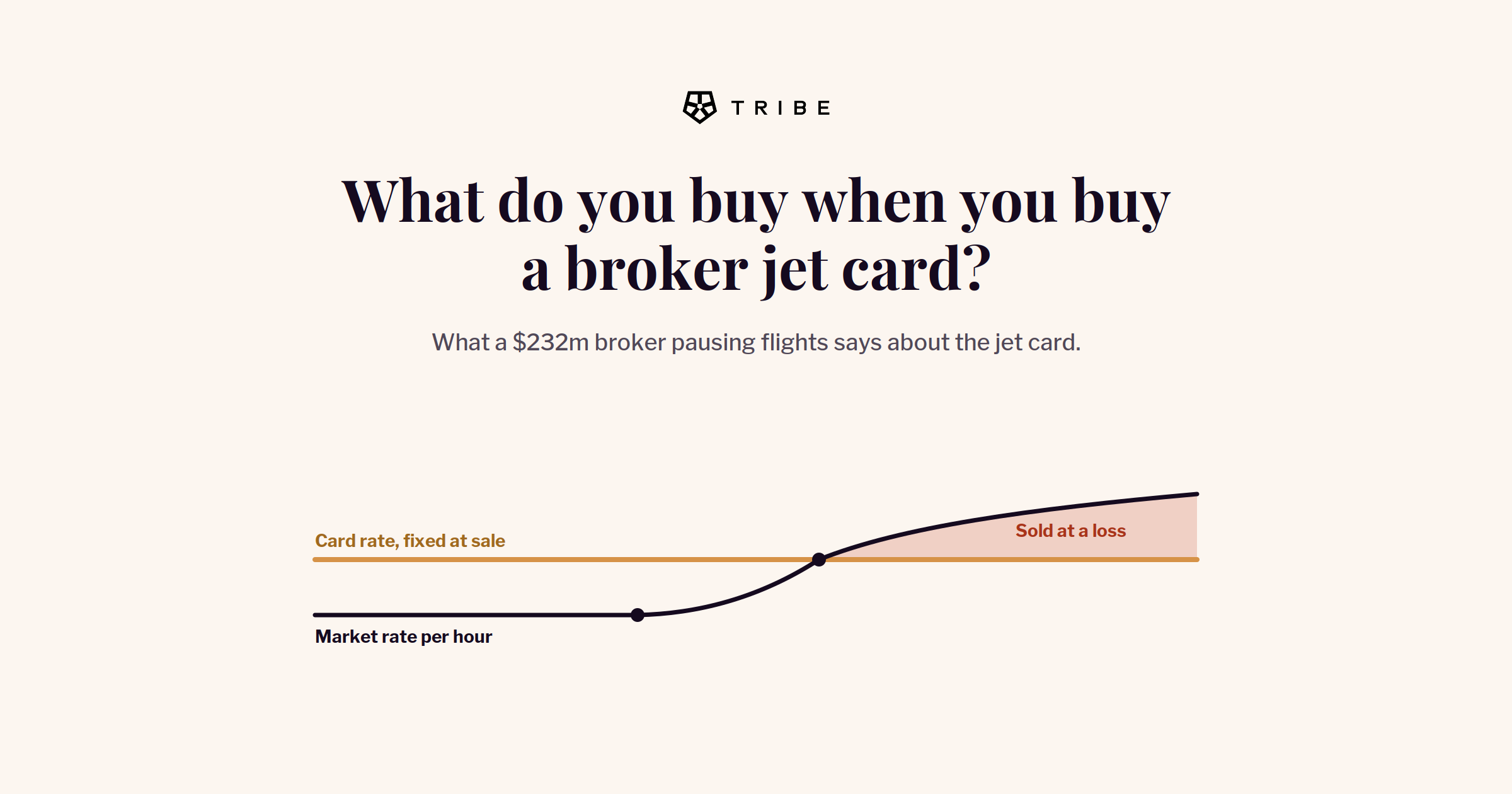
What do you buy when you buy a broker jet card?
18 September 2026 - 10 Minutes read
What a $232m broker pausing flights says about the jet card.
Heading 1
Heading 2
Heading 3
Heading 4
Heading 5
Heading 6
Lorem ipsum dolor sit amet, consectetur adipiscing elit, sed do eiusmod tempor incididunt ut labore et dolore magna aliqua. Ut enim ad minim veniam, quis nostrud exercitation ullamco laboris nisi ut aliquip ex ea commodo consequat. Duis aute irure dolor in reprehenderit in voluptate velit esse cillum dolore eu fugiat nulla pariatur.
Block quote
Ordered list
- Item 1
- Item 2
- Item 3
Unordered list
- Item A
- Item B
- Item C
Bold text
Emphasis
Superscript
Subscript
